
NewsCONTACT US
Contact: 13539464725 Miss Chen
WeChat ID: jenny13539464725
QQ: 3202009534 Website:
www.londerlight.com
Email: info@londerlight.com
Address: Gangqian Avenue, Nansha District, Guangzhou City
|
News Center
The definition, function and comment of stage lighting
Time:2020/3/31 18:01:49;Click:1081
The role of stage lighting in modern stage performances: 1 lighting performance, allowing the audience to see the actors' performances and scenes; 2 guiding the audience's line of sight; 3 shaping the characters, highlighting the emotions and showing the stage illusion; 4 creating the space environment needed in the drama 5 rendering the atmosphere in the drama; 6 showing the transition between time and space, highlighting the contradictions and conflicts of the drama and strengthening the stage rhythm, enriching the artistic appeal. Sometimes it also works with stage stunts.
In modern performances, the intensity, color, distribution of lighting areas, and movement of lights have greater flexibility and controllability. The artistic effect of the stage lighting is reflected by the progress of the performance and the constant change of the stage atmosphere. Stage lighting is a combination of space art and time art. The historical development of stage lighting is closely related to the evolution of drama and the advancement of science and technology. According to the optical structure, the stage lamps can be divided into three categories: floodlights, spotlights and slides; according to the parts installed on the stage, there are face light, slap light, foot light, column light, top row light, sky light, ground light and flow. The division of light. A floodlight system is a luminaire that emits evenly soft light and illuminates a certain direction of light. Individual floodlights, overhead lights, foot lights, and curtain lights are commonly used to illuminate skylights, painting sets, or performance zones. A concentrating system is a luminaire that emits orientation and can control the extent of the zone. Generally, the principle of refraction is used to cast different spots through the lens. For example, a threaded soft-light lens produces a soft spot on the edges. A lamp that uses a reflective optical structure to achieve a concentrating effect is called a backlight. The slide system is to add a set of objective lenses in front of the spotlight to make it project. This kind of slide can be further divided into: 1 shooting slides using slide imaging; 2 shooting slides that cast cloud, water, fire and other active images on the scene through rotating disc chain; 3 using long focal length objective Make small spots visible. A follow-up light that highlights the protagonist's image; a 4 ellipsoidal concave mirror called a luminaire for a modeling light. The stage lighting control system must be able to effectively control and deploy all the luminaires and produce a harmonious artistic effect. It consists of three parts: power distribution board, dimmer and total console. The stage lighting design mainly carries out artistic conception according to the overall idea of the script, the director's requirements and the stage art, draws the layout design, and arranges the technical embodiment work. Lighting design should be able to use a variety of modeling methods to adapt to different styles of performance, such as performance requirements to show a realistic style, while others require the creation of abstract, freehand or metaphorical mood. Early dramas have had an open-air or semi-open-air performance history, all using daylight as a light source. However, as the venue moved into the room or at night, stage lighting began to appear. According to the written records, after 1102, the Liangzhu of the Northern Song Dynasty in China performed "Hundred Plays" on the Lantern Festival. The platform was used as a stage for the downstairs, and there was a light ball on each side of the platform. Zhang Yu, internal combustion candle, this is the beginning of China's artificial light source. In the 16th century Europe, if it was performed outdoors at night, a xenon lamp was used as a light source. During the fifteenth to sixteenth centuries, Italian setters conducted experiments on shade lighting. At the beginning of the 17th century, the Italians did various experiments to control the dim light during the performance. In the French classical performances, I also tried to show how to change the time of day and night. Since the 18th century, the practice of extinguishing the audience's seat lights and leaving only the stage lighting has become a practice. When the Dresden Theatre performed the opera "Yeo" in 1755, there were as many as 8,000 candles lit on the stage. Since the 19th century, light sources have changed rapidly. 1808 The London Lanxin Theater first used gas lamps. Because the gas lamp can be uniformly controlled by the pipeline and can be promoted with light and dark changes. The British H. Drammont invented the lime lamp, which produces a light color similar to daylight or moonlight on the stage. In 1870, the United Kingdom used a lime lamp as a chasing light, and then painted it on a glass cover of a lime lamp to obtain a chromatic effect. 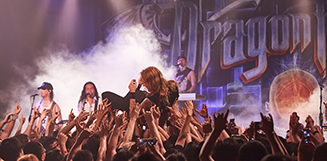
|
Product search
Popular searches:
Moving Head Beam Light
LED Waterproof Light
Maoming Rongde Lighting Technology Co., Ltd.

 13539464725
 3202009534